Kenyan Artist’s US Programme Sparks Neo‑Colonialism Debate
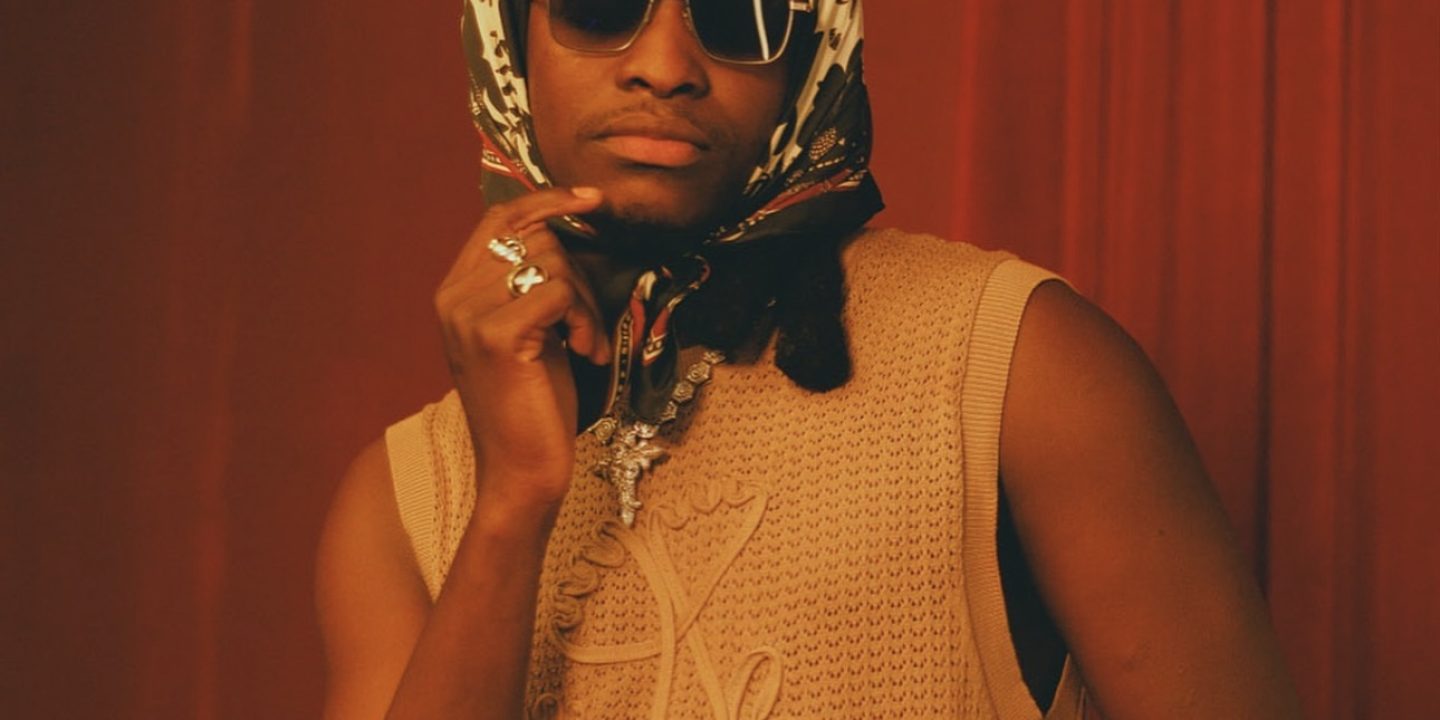
When 24‑year‑old R&B and Afro‑soul singer Nikita Kering announced her invitation to the U.S. Department of State’s International Visitor Leadership Program (IVLP), she framed the honour as a chance to champion economic growth and…

When 24‑year‑old R&B and Afro‑soul singer Nikita Kering announced her invitation to the U.S. Department of State’s International Visitor Leadership Program (IVLP), she framed the honour as a chance to champion economic growth and mentorship for Kenya’s struggling creative industries. In a social‑media post she shared photos of an orientation briefing titled “Driving Economic Growth through the Creative Industries: A Project for Kenya” and declared herself “honoured to join the U.S. Department of State’s International Visitor Leadership Program to explore opportunities for economic growth through Kenya's creative industries.”
The announcement, however, quickly provoked a sharp backlash on Kenyan digital platforms, especially on X (formerly Twitter). Critics questioned why a foreign superpower should be drafting Kenya’s cultural blueprint, branding the programme as a vehicle for American neo‑colonialism and, in some cases, alleging covert intelligence motives. The debate has resurfaced long‑standing anxieties about U.S. cultural diplomacy and its historical entanglements with African artistic expression.
IVLP Invitation: Structure and Expectations
The International Visitor Leadership Program, established in 1940, is described by the U.S. government as its premier professional exchange initiative. Unlike open‑application fellowships, participants are hand‑picked and nominated by U.S. embassies worldwide on the basis of perceived leadership potential, meaning there is no public application process. Alumni lists span hundreds of heads of state, senior policymakers and cultural figures, underscoring the programme’s reputation as a conduit for high‑level networking and policy dialogue across sectors.
Kering’s invitation arrived with a formal orientation that included a slide titled “Driving Economic Growth through the Creative Industries: A Project for Kenya.” In her own words, she highlighted the personal hurdles she faced navigating the music business independently during her early career, noting that she hopes to use the platform to advocate for stronger industry frameworks, mentorship, and sustainable monetisation pathways for emerging Kenyan creatives. The emphasis on structural support reflects her view that the IVLP can translate personal experience into broader sectoral advocacy.
From the perspective of the U.S. State Department, the IVLP serves as a public‑diplomacy tool designed to showcase American values while fostering collaborative solutions to shared challenges. By inviting a rising Kenyan artist, the programme signals an interest in the creative economy as a driver of economic diversification, a narrative that aligns with broader U.S. strategies to engage African youth and entrepreneurial sectors. The invitation therefore carries dual symbolism: a personal milestone for Kering and a diplomatic gesture aimed at deepening bilateral cultural ties.
Nevertheless, the closed nomination process and the embassy‑driven selection raise questions about the criteria used to identify “leadership potential.” Critics argue that such discretion allows the United States to curate a roster of individuals whose public profiles align with its diplomatic objectives, potentially shaping the discourse around Kenya’s creative sector in ways that serve external interests as much as, or more than, local aspirations.
Kenyan Online Reaction: Praise, Skepticism, and Accusations
The initial wave of congratulations from industry peers and fans soon gave way to a chorus of dissent across Kenyan digital spaces. On X, users questioned the rationale behind a foreign superpower “spearheading a blueprint to ‘develop’ Kenya’s creative economy,” dismissing the effort as performative diplomacy with limited tangible benefit for grassroots artists. The rapid shift from celebration to critique illustrates how quickly public sentiment can pivot when foreign involvement touches culturally sensitive terrain.
One commentator warned that “when foreign embassies and Western institutions act as primary kingmakers, local artists may consciously or subconsciously tailor their music, language, and messaging to appeal to Western gatekeepers and donor priorities rather than local audiences.” This observation captures a broader anxiety that external patronage could dilute authentic artistic expression in favour of content that satisfies foreign expectations, thereby reshaping the creative narrative from within.
YouTuber Lynn Ngugi amplified the critique, posting a multi‑part question: “Can someone please explain to me how America, through the U.S. State Department’s International Visitor Leadership Program (IVLP), intends to drive economic growth through Kenya’s creative industries? Considering that IVLP is a public diplomacy programme designed to advance American foreign policy interests, shouldn’t we be asking whose interests are actually being served here? And at what point do we begin to question the relationship between foreign governments, our creative economy and the influence of the artists they deliberately choose to engage?” Ngugi’s interrogation underscores the demand for transparency about the programme’s underlying motives.
Other users framed the selection through the lens of cultural neo‑colonialism, arguing that when Washington curates and funds African artistic leadership, it subtly dictates which genres, themes and political sensibilities are rewarded. The accusation that the cohort could be a “CIA operation” remains unsubstantiated, yet the speculation reflects a lingering distrust rooted in historical precedents of covert cultural funding. The digital backlash therefore intertwines contemporary concerns with a collective memory of past foreign interventions in African cultural spaces.
Historical Precedents of US Cultural Diplomacy in Africa
Kenyan scepticism does not exist in a vacuum; historians note that the United States has a well‑documented, decades‑long history of using music, literature and cultural diplomacy to advance geopolitical objectives across Africa. During the Cold War, the CIA covertly established the Congress for Cultural Freedom (CCF), an anti‑communist cultural advocacy network that operated in 35 countries, including newly independent African nations. Front organisations such as the Farfield Foundation secretly bankrolled major pillars of post‑colonial African literature and arts.
Among the beneficiaries were Transition Magazine, founded in Uganda in 1961 by Rajat Neogy, which became East Africa’s most influential intellectual and literary journal, featuring contributors like Ngũgĩ wa Thiong'o, Ali Mazrui and Wole Soyinka. Another major recipient was the Mbari Writers and Artists Club in Ibadan, Nigeria, a foundational hub that published early works by Chinua Achebe, Christopher Okigbo and J.P. Clark, alongside the literary journal Black Orpheus. The 1967 exposés by The New York Times and Ramparts revealed these covert ties, sending shockwaves through African intellectual circles and prompting outrage that anti‑colonial work had been unwittingly used as a pawn in Washington’s ideological war against the Soviet Union.
In the 1950s and 1960s, the U.S. State Department also deployed prominent African‑American musicians—including Louis Armstrong, Duke Ellington and Dizzy Gillespie—as “Jazz Ambassadors” across Africa. Declassified diplomatic cables and historical investigations have shown that these tours were often timed to soften anti‑American sentiment during periods of overt U.S. political interference. Most notably, Louis Armstrong’s State Department‑sponsored tour of the Republic of the Congo in October 1960 took place just weeks after a U.S.-backed military coup that ousted democratically elected Prime Minister Patrice Lumumba; intelligence operatives used the goodwill tour as cover during a volatile period of covert intervention.
These historical episodes illustrate a pattern in which cultural exchange programmes have been leveraged to project soft power, shape public opinion and, at times, mask strategic objectives. The legacy of such interventions informs contemporary Kenyan concerns that the IVLP, despite its stated developmental goals, may echo earlier attempts to steer African cultural narratives toward Western interests.
Potential Impacts on Kenya’s Creative Industry Governance
Critics argue that external fellowships like the IVLP can divert pressure away from local governments—such as Kenya’s Ministry of Youth Affairs, Creative Economy and Sports—to address systemic failures at home. The ministry has long struggled with broken royalty collection societies, weak intellectual property enforcement and inadequate public arts funding. By positioning foreign diplomatic bodies as primary “kingmakers,” the narrative may shift away from demanding domestic reforms that could strengthen the sector’s institutional foundations.
A Kenyan user on X warned that “integrating influential artists into foreign diplomatic networks risks blunting their willingness to critique either Western foreign policy or domestic governance aligned with U.S. strategic interests.” The concern is that artists, aware of their elevated international profile, might self‑censor or align their messaging with donor expectations, thereby muting dissenting or locally resonant voices. This dynamic could undermine the role of artists as independent cultural commentators and limit the sector’s capacity to challenge power structures.
Moreover, the perception of cultural neo‑colonialism extends beyond individual artists to the broader ecosystem of genre, theme and political sensibility. If Washington curates and funds African artistic leadership, it may subtly influence which creative expressions receive support, potentially sidelining anti‑imperialist or authentically local narratives that challenge the status quo. Such influence could reshape the creative economy’s trajectory, privileging content that aligns with donor priorities over grassroots cultural movements.
The debate also touches on the broader question of who defines “economic growth” for Kenya’s creative industries. While the IVLP’s orientation slide emphasised structural support, critics contend that growth metrics imposed by external actors may not reflect the lived realities of Kenyan creators, who often rely on informal networks and community‑based platforms. Without clear alignment between foreign programme objectives and locally identified needs, the risk of misdirected resources and missed opportunities remains significant.
Future Pathways: Balancing International Support with Local Agency
The controversy surrounding Kering’s IVLP selection underscores a need for a nuanced approach to international cultural partnerships. While external resources can provide valuable exposure, mentorship and capacity‑building, they must be calibrated to reinforce, rather than replace, domestic policy initiatives aimed at strengthening Kenya’s creative sector. A collaborative framework that foregrounds Kenyan priorities could mitigate fears of covert agenda‑setting and ensure that benefits accrue to the broader artistic community.
One possible pathway is to embed clear, locally‑defined objectives within any foreign‑funded programme, ensuring that outcomes are measured against Kenya’s own development benchmarks. Transparent reporting, joint governance structures and a commitment to safeguarding artistic independence could address concerns that Western gatekeepers are dictating creative direction. Such mechanisms would also allow for accountability, enabling Kenyan stakeholders to assess whether the programme delivers tangible improvements in royalty collection, intellectual property enforcement or public arts funding.
Until such safeguards are articulated, the conversation is likely to remain polarized. Neither the U.S. Embassy in Nairobi nor Kering has issued a formal response to the accusations of neo‑colonialism or intelligence links, leaving space for speculation to flourish. The silence highlights the delicate balance between diplomatic outreach and the need for open dialogue with the communities directly affected by such initiatives.
As Kenya’s youth continue to wield cultural capital as a potent political force, the central question remains: can international diplomacy support genuine economic growth without eclipsing the authentic voices it claims to uplift? The answer will depend on whether future exchanges prioritize partnership over patronage, and whether Kenyan artists retain the agency to shape their own narratives while engaging with global platforms.