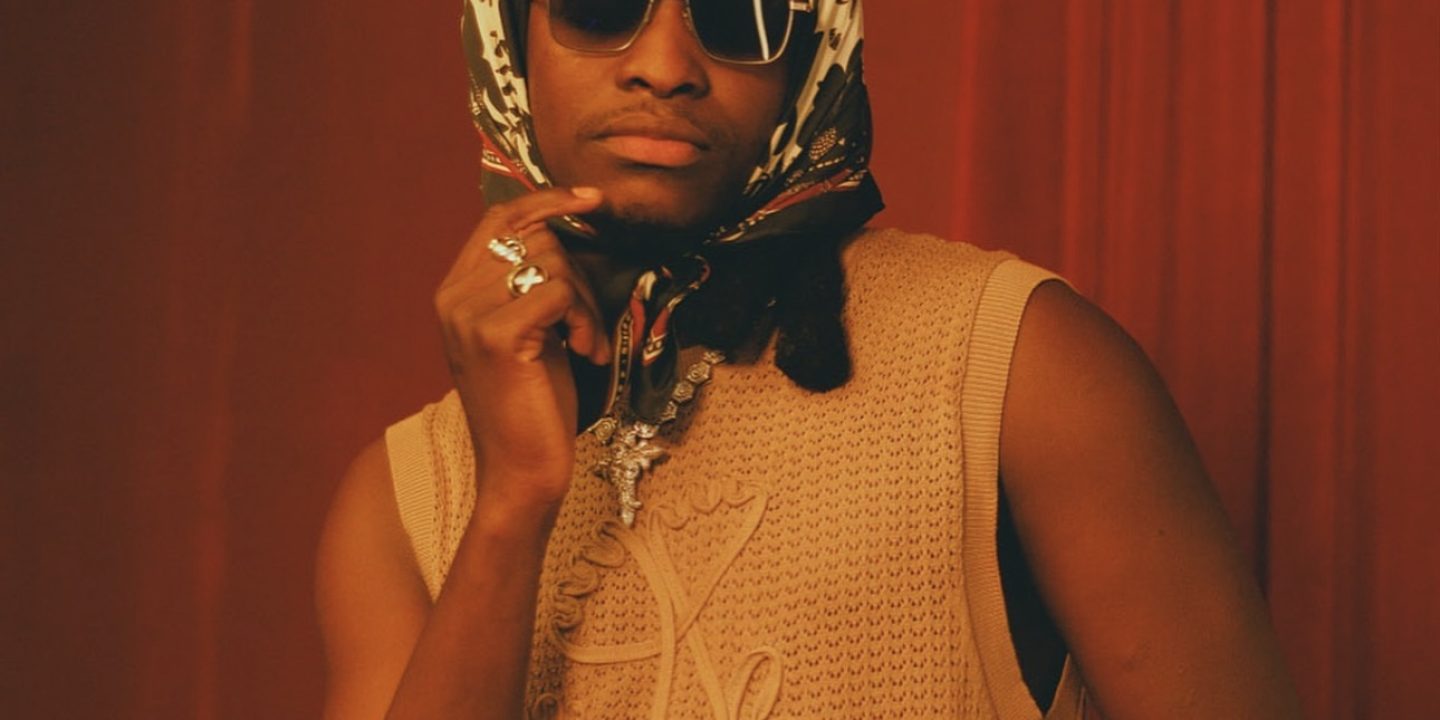
Asake: rhythm, vocal texture and the architecture of Lagos street-pop
Asake's rise to fame in the Nigerian music scene has been nothing short of phenomenal. With his unique blend of Afrobeats, dynamic rap street pop, and fújì music, he has managed to captivate audiences both locally and internationally. His…

Asake's rise to fame in the Nigerian music scene has been nothing short of phenomenal. With his unique blend of Afrobeats, dynamic rap street pop, and fújì music, he has managed to captivate audiences both locally and internationally. His music often combines traditional Yoruba music and percussion with contemporary styles, creating a distinctive sound that sets him apart from his peers. Asake's vocal style delivery, which primarily features Yoruba merged with English, urban colloquial slang, and Nigerian Pidgin, reflects the influences of Nigerian hip hop and fújì music.
Asake's architectural soundscapes, rooted in the vibrant streets of Lagos, have been expertly crafted to reflect the city's rhythmic pulse. His ability to merge different musical styles and create a unique sound has been a key factor in his success. With his debut album, Mr. Money with the Vibe, Asake announced his arrival on the music scene, and subsequent releases have only solidified his position as a leading figure in Nigerian music. As his career continues to evolve, it will be interesting to see how Asake's sound adapts and grows, and how he navigates the complexities of the music industry while remaining true to his artistic vision.
Asake: Cultural context and creative identity
Asake's rise to fame in the Nigerian music scene has been nothing short of phenomenal, with his unique blend of Afrobeats, dynamic rap street pop, and fújì music captivating audiences both locally and internationally. His distinctive musical style, which often amalgamates traditional Yoruba music and percussion with heterogeneous contemporary music, has been shaped by his cultural context and creative identity. As a Nigerian singer, rapper, and songwriter, Asake's music reflects the rich cultural heritage of his homeland, with his vocal style delivery primarily in Yoruba merged with English, urban colloquial slang, and Nigerian Pidgin. This blend of languages and styles has enabled Asake to connect with a diverse range of listeners, from his hometown of Lagos to a global audience.
Asake's creative identity has been influenced by his background and upbringing in Lagos, a city known for its vibrant music scene and rich cultural diversity. His music often reflects the city's rhythmic pulse, with its unique blend of traditional and contemporary sounds. Asake's architectural soundscapes, rooted in the streets of Lagos, have been expertly crafted to evoke the city's energy and spirit. From the bustling streets of Lagos to the global stage, Asake's music has been shaped by his experiences and influences, resulting in a unique sound that is both deeply personal and universally relatable. With his music, Asake has been able to transcend cultural and geographical boundaries, connecting with listeners from diverse backgrounds and establishing himself as a major force in the global music scene.
Asake's musical style has been characterized by its eclecticism and diversity, incorporating a range of influences and genres into his sound. From Afrobeats to dynamic rap street pop, and from fújì music to Afro fusion, Asake's music has been shaped by a wide range of styles and traditions. His vocal style delivery, which often blends Yoruba with English, urban colloquial slang, and Nigerian Pidgin, has added to the richness and diversity of his sound, enabling him to connect with listeners on multiple levels. Asake's music has also been influenced by his collaborations with other artists, from Olamide to Wizkid, and from Burna Boy to DJ Snake. These collaborations have helped to shape his sound and expand his creative horizons, resulting in a unique and innovative style that is both deeply rooted in Nigerian culture and universally relatable.
The cultural context of Lagos has played a significant role in shaping Asake's creative identity and musical style. The city's vibrant music scene, with its rich cultural diversity and eclectic mix of traditional and contemporary sounds, has provided Asake with a unique sonic landscape to draw upon. From the traditional Yoruba music and percussion that underpin his sound to the dynamic rap street pop and Afrobeats that have helped to establish him as a major force in the global music scene, Asake's music has been deeply influenced by the cultural context of Lagos. As a result, his music has become an integral part of the city's sonic identity, reflecting its energy, spirit, and creative diversity. With his unique blend of traditional and contemporary sounds, Asake has been able to capture the essence of Lagos, creating a musical style that is both deeply personal and universally relatable.
Asake: Production, form and standout choices
Asake's production style is a key element in his music, with a focus on creating a unique sound that blends traditional Yoruba music and percussion with contemporary styles. His use of Afrobeats, dynamic rap street pop, and fújì music creates a distinctive sound that is both rooted in Nigerian culture and accessible to a global audience. The production on his albums, such as Mr. Money with the Vibe and Work of Art, is characterized by its use of infectious rhythms, catchy melodies, and innovative instrumentation. For example, the use of traditional Yoruba percussion instruments, such as the talking drum, adds a unique texture to his music and helps to create a sense of cultural authenticity.
The form of Asake's music is also noteworthy, with a focus on creating a sense of energy and momentum. His songs often feature complex rhythms and time signatures, which add to the sense of tension and release. The use of call-and-response patterns, a common feature of African music, also helps to create a sense of community and participation. Asake's vocal delivery is also an important aspect of his music, with a focus on conveying emotion and intensity. His use of Yoruba, English, and Nigerian Pidgin creates a sense of linguistic and cultural diversity, and helps to reflect the complexities of Nigerian identity. The way he blends different languages and dialects in his music also adds to the sense of rhythm and flow, creating a unique and captivating sound.
Asake's standout choices in terms of production and form are also reflected in his collaborative work. For example, his collaboration with Wizkid on the EP Real, Vol. 1 resulted in a unique sound that blended Asake's distinctive style with Wizkid's more polished and refined approach. The EP's use of catchy hooks and melodies, combined with Asake's innovative production and vocal delivery, helped to create a sense of excitement and anticipation. The fact that all five tracks from the EP debuted in the top five on the Turntable Top 100 Songs chart is a testament to the success of this collaboration and the appeal of Asake's music to a wider audience. Similarly, his collaboration with DJ Snake on the single "Worship" resulted in a unique sound that blended Asake's Afrobeats style with DJ Snake's more electronic and experimental approach.
The way Asake's music is structured and arranged is also noteworthy, with a focus on creating a sense of drama and tension. His songs often feature complex arrangements, with multiple sections and layers of sound. The use of instrumental breaks and interludes adds to the sense of dynamics and contrast, and helps to create a sense of surprise and anticipation. Asake's use of vocal processing and effects also helps to create a sense of space and atmosphere, and adds to the sense of emotional intensity and urgency. The fact that his music has been able to transcend cultural and linguistic boundaries, and appeal to a global audience, is a testament to the power and universality of his sound. Asake's ability to blend different styles and influences, and create a unique and distinctive sound, has helped to establish him as one of the most exciting and innovative artists in the Nigerian music scene.
Asake: How audiences encounter and interpret the work
Asake's music is a reflection of the vibrant streets of Lagos, with its unique blend of Afrobeats, dynamic rap street pop, and fújì music influences. The way his songs are structured and arranged is noteworthy, with a focus on creating a sense of drama and tension. This is particularly evident in his live performances, where he is able to connect with his audience on a deeper level. For instance, his performance at the Theatre Royal, Drury Lane, in London, where he was accompanied by a live orchestra, a 40-member choir, and live band The Compozers, showcased his ability to craft a sense of energy and momentum. The fact that he was able to headline this venue, a first for an Afrobeats artist, is a testament to his growing popularity and influence.
The cultural context of Lagos has played a significant role in shaping Asake's creative identity and musical style. The city's vibrant music scene, rich cultural heritage, and diverse influences have all contributed to his unique sound. Asake's music is often an amalgamation of traditional Yoruba music and percussion, spanning heterogeneous contemporary music. This blend of traditional and modern influences has allowed him to create a sound that is both rooted in his cultural heritage and relevant to a contemporary audience. Furthermore, his use of language, primarily in Yoruba merged with English, urban colloquial slang, and Nigerian Pidgin, reflects the linguistic diversity of Lagos and adds to the richness and complexity of his music.
Asake's collaborative work is also noteworthy, with collaborations with artists such as Wizkid, Burna Boy, and DJ Snake. These collaborations have allowed him to experiment with different sounds and styles, pushing the boundaries of his music and expanding his creative horizons. For example, his collaboration with Wizkid on the EP Real, Vol. 1, debuted at number one on TurnTable's Album chart, with all five tracks debuting in the top five on the Turntable Top 100 Songs chart. This success is a testament to the chemistry and creativity that Asake brings to his collaborative work. Moreover, his ability to work with artists from different genres and backgrounds has helped to further establish him as a major force in the music industry.
The way Asake's music is received and interpreted by his audience is also an important aspect of his artistry. His fans, who have been drawn to his unique sound and energetic live performances, have helped to propel him to the top of the Nigerian music scene. Asake's music has been able to transcend cultural and linguistic boundaries, resonating with listeners from diverse backgrounds. His ability to connect with his audience on a deeper level, through his music and live performances, has helped to create a sense of community and shared experience. This connection with his audience is a key element of his success, and has helped to establish him as one of the most exciting and innovative artists in the Nigerian music scene. As his career continues to evolve, it will be interesting to see how his music and message are received and interpreted by an increasingly global audience.
Asake: The wider creative landscape
Asake's impact on the Nigerian music scene extends beyond his own discography, as he has played a significant role in shaping the sound of contemporary Afrobeats. His unique blend of traditional Yoruba music, dynamic rap street pop, and fújì music influences has inspired a new generation of artists to experiment with their sound. The success of his albums, such as "Mr. Money with the Vibe" and "Work of Art", has paved the way for other artists to push the boundaries of what is possible in the genre. Furthermore, his collaborations with international artists, such as Wizkid, Burna Boy, and DJ Snake, have helped to introduce Afrobeats to a global audience, further increasing its popularity and influence.
The city of Lagos, with its vibrant music scene and rich cultural heritage, has been a significant influence on Asake's creative identity and musical style. The city's energetic and fast-paced rhythm is reflected in Asake's music, which often features complex rhythms and percussive beats. The use of traditional Yoruba music and percussion in his songs adds a unique layer of depth and authenticity to his sound, setting him apart from other artists in the genre. Additionally, the city's cultural diversity and history of musical innovation have provided Asake with a rich source of inspiration, allowing him to draw on a wide range of influences and create a truly distinctive sound.
Asake's music has also had a significant impact on the wider cultural landscape of Nigeria, with his songs often addressing themes of love, relationships, and everyday life. His music has provided a soundtrack for a generation of young Nigerians, who see themselves and their experiences reflected in his songs. The success of his music has also helped to promote Nigerian culture and identity, both within the country and internationally. Furthermore, his music has played a role in shaping the country's cultural narrative, providing a platform for storytelling and self-expression. As a result, Asake's music has become an important part of Nigeria's cultural heritage, reflecting the country's vibrant musical traditions and its people's resilience and creativity.
The global reach of Asake's music has also been significant, with his songs and albums gaining popularity in countries around the world. His collaboration with international artists has helped to introduce Afrobeats to new audiences, while his music has also been featured in various films, television shows, and commercials. The success of his music has paved the way for other African artists to break into the global market, helping to promote African music and culture on a global scale. As a result, Asake's music has become a cultural ambassador for Nigeria and Africa, promoting the continent's rich musical heritage and creative talent to a global audience. His impact on the music industry will likely be felt for years to come, as he continues to push the boundaries of what is possible in Afrobeats and inspire a new generation of artists and fans.
Asake: The critical verdict and lasting questions
Asake's remarkable ascent in the music industry has sparked a plethora of discussions regarding his artistic vision, cultural relevance, and the broader implications of his work on the Nigerian music scene. One of the most intriguing aspects of Asake's artistry is the way he seamlessly blends traditional Yoruba music and percussion with contemporary styles, creating a unique sound that is both rooted in his cultural heritage and forward-thinking in its approach. This eclecticism has enabled him to transcend genre boundaries and appeal to a diverse range of audiences, both within Nigeria and internationally. Furthermore, Asake's music often incorporates elements of Nigerian hip hop and fújì music, reflecting the complex cultural landscape of Lagos and the various influences that have shaped his artistic identity.
The critical reception of Asake's work has been largely positive, with many praising his innovative approach to Afrobeats and his ability to craft infectious, high-energy songs that showcase his vocal prowess and lyrical dexterity. However, some critics have argued that Asake's music lacks depth and nuance, relying too heavily on catchy hooks and rhythms rather than meaningful lyrics or thematic complexity. While this criticism is not entirely unfounded, it overlooks the fact that Asake's music is often designed to be a reflection of the vibrant, fast-paced environment of Lagos, where the emphasis is on energy, movement, and communal celebration rather than introspective contemplation. In this sense, Asake's music can be seen as a form of sonic anthropology, capturing the essence of Lagos' streets and translating it into a universal language that can be understood and appreciated by listeners from diverse cultural backgrounds.
Asake's collaboration with other artists has also been a key aspect of his career, with notable partnerships with Wizkid, Burna Boy, and DJ Snake, among others. These collaborations have not only helped to expand Asake's creative horizons but also introduced his music to new audiences and facilitated a cross-pollination of styles and influences. The release of his collaborative EP with Wizkid, Real, Vol. 1, is a case in point, featuring a range of innovative productions that blend Asake's signature sound with Wizkid's more experimental approach. This willingness to collaborate and push the boundaries of his artistry has been a hallmark of Asake's career, and it will be interesting to see how he continues to evolve and adapt in the future.
Ultimately, Asake's music raises important questions about the nature of artistic identity, cultural authenticity, and the global dissemination of African music. As a Nigerian artist who has achieved international recognition, Asake is part of a larger conversation about the role of African music in the global cultural landscape. His success has helped to pave the way for other Nigerian artists, and his music has played a significant role in shaping the sound of contemporary Afrobeats. As the Nigerian music scene continues to evolve and diversify, it will be fascinating to see how Asake's artistry adapts and responds to these changes, and how his music continues to reflect the vibrant, dynamic culture of Lagos and the broader African diaspora.